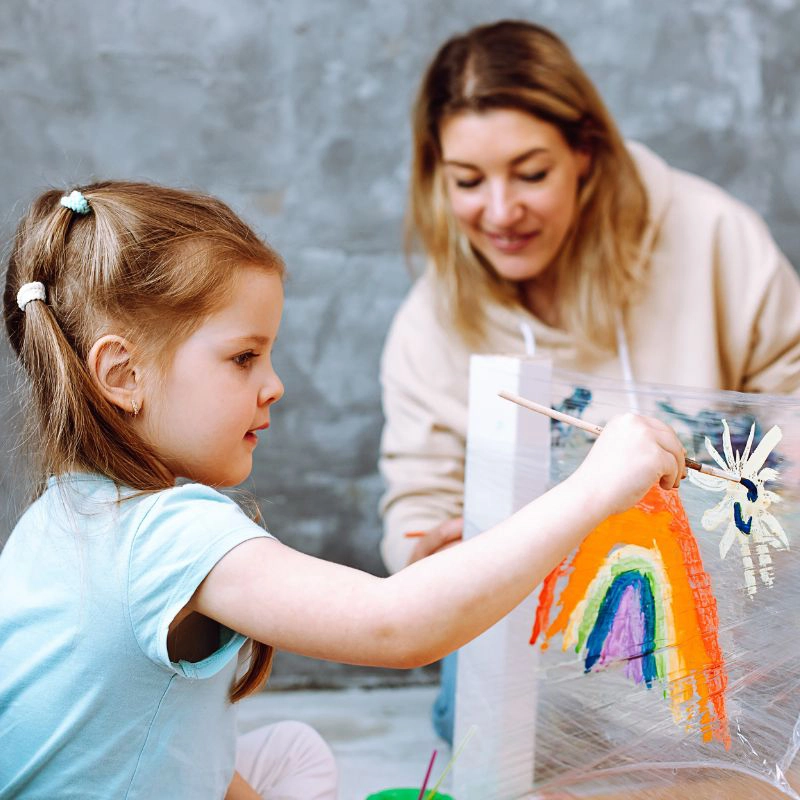
If you notice that she is hesitant, sit down with her and start to draw yourself – she might decide to join if you can make it look fun! Being able to draw will lay a solid foundation for your child to be able to write when the time comes for it.
Realize that at her age, the process of drawing is more important than what she actually creates. Encouraging her effort will have more impact than focusing on the outcome. Understand that drawing for children can become a soothing activity. Some children may take to drawing as a duck would take to the water.
Offering encouragement and guiding her, providing lots of opportunities to draw using different media, and investing the time to ensure your child is comfortable and gains confidence will be a big help. In other words, it is important for you to nurture and appreciate the effort your child puts into a drawing. It pays to take it more seriously.
Whether a child draws like a genius or not doesn’t matter. Rest assured, drawing activities for kids at home will play a critical role in your child’s development and growth. Value it, appreciate the effort, and use what your child draws as a springboard for initiating meaningful conversations and opportunities for strengthening bonding.
Improve how your child communicates:
As stated earlier, toddlers and young children cannot always find the right words and actions to express themselves. But by looking at what they draw, parents can gain insight into their child’s thoughts and feelings. Apart from this, being able to express freely helps boost a child’s emotional intelligence.
Help your child think clearly:
When your child begins to draw, she is faced with multiple decisions and choices — whether it’s ‘what colour should I use here?’ or ‘How do I draw an aeroplane and connect one part of its body to another?’ ‘How many petals should my flower have?’ ‘Should I make each petal look different?’ All these questions require her to solve problems. You can learn a lot by asking questions such as, why did she draw certain parts of the flower the way she did? Why she used one colour and not another? See what answers your child comes up with to justify her decisions.
Stimulate your child’s imagination:
Drawing sets your child’s imagination free. Each time she draws, she learns to access her imagination and is able to put down on paper what she has in her mind. As she becomes more adept at drawing, your child will be able to create all the things she imagines and notices around her. You really cannot fathom what your child’s boundless imagination can bring to life!
Make your child future-ready:
Drawing lays the foundation for logical thinking or abstract thought. Whether your child is still at home with you or at school already, drawing helps her prepare for understanding difficult concepts and ideas. Learning creative ways of thinking at an early age prepares your child for future education.
Don’t forget to provide a variety of materials to draw with, and don’t ignore digital media tools. It makes sense to help your child get used to tablets and other smart devices she will be using frequently in the future.